Coastal guide
What Affects the Cost of Home Theater & AV Installation in San Diego?
Home theater and AV installation cost depends less on a single device and more on the complete installation environment: room construction, equipment, speaker layout, wiring, access, concealment, integration, and finish expectations. Two systems that look similar on a shopping list can require very different work once they are planned for the room.
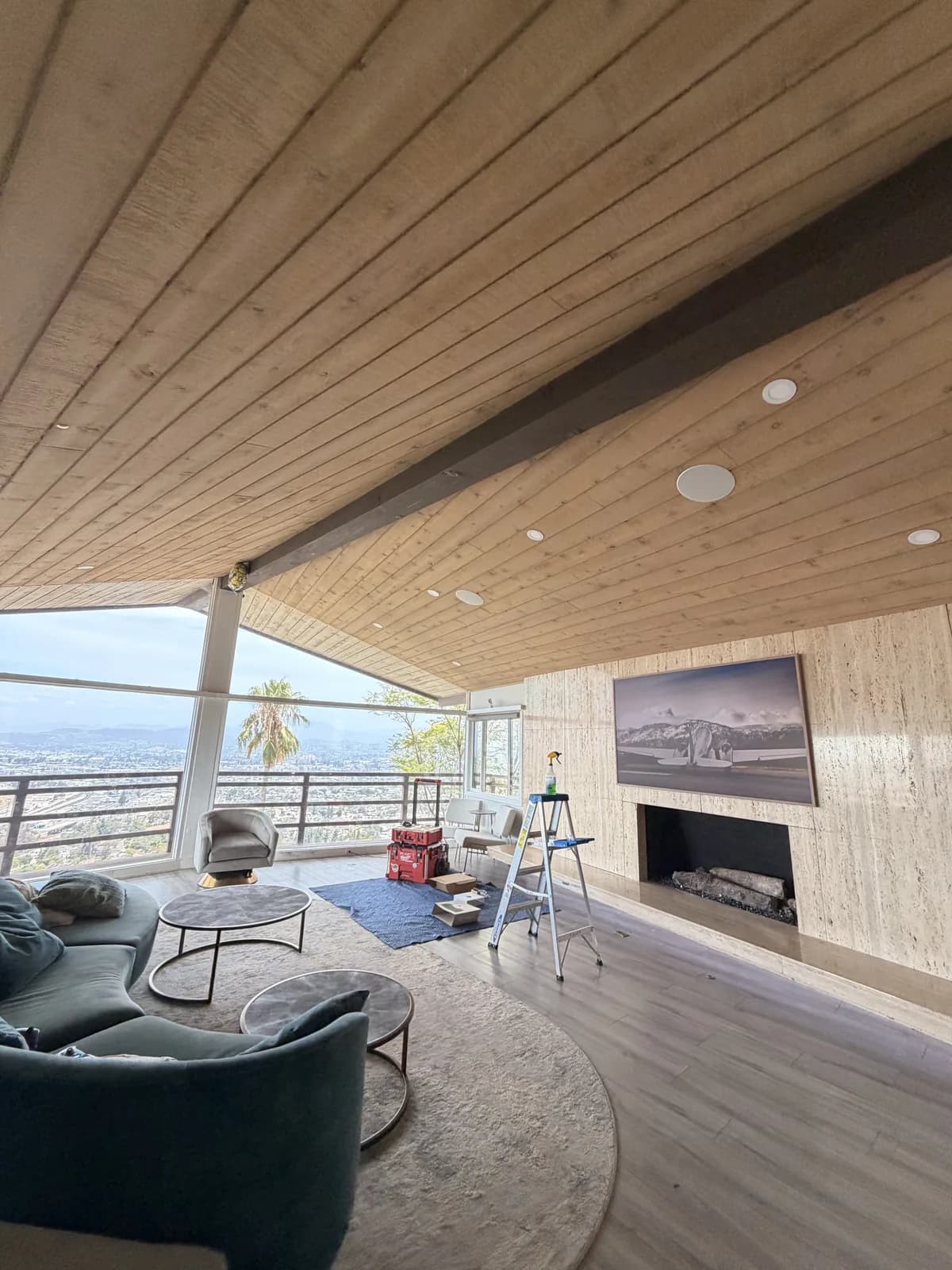
Home theater and AV installation cost depends less on a single device and more on the complete installation environment: room construction, equipment, speaker layout, wiring, access, concealment, integration, and finish expectations. Two systems that look similar on a shopping list can require very different work once they are planned for the room. That is why Coastal reviews the space and the complete system before preparing a project-specific estimate instead of publishing a one-size-fits-all price.
Why Apparently Similar AV Projects Can Require Different Work
A wall-mounted display and a pair of speakers may sound like a straightforward installation. In one room, the wall may be standard drywall over accessible wood framing with existing cable paths nearby. In another, the display may sit on stone or masonry, the speakers may be recessed into a finished ceiling, and the equipment may need to connect across the room without visible wiring. The equipment list can look similar while the mounting, routing, access, and finish requirements are completely different.
The most useful estimate therefore starts with context: room photos, wall and ceiling conditions, equipment information, preferred locations, existing wiring, access above or below the room, and the finished appearance you expect. Those details reveal whether the project is mainly equipment setup or an integrated installation involving mounting, concealment, placement, carpentry judgment, and careful coordination.
Room Construction, Mounting Surfaces, and Access
The room itself is often the first cost and complexity driver. Drywall over wood studs, plaster and lath, masonry, brick, stone, wood paneling, and finished feature walls each require a different mounting approach. The installer has to identify a reliable attachment point, protect the surrounding finish, and select hardware suited to the surface and the weight being supported. Large displays, full-motion mounts, projectors, and heavier speakers add more load and make alignment more important.
Ceiling height, vaulted construction, fireplace surrounds, built-ins, limited working clearance, and the location of studs or blocking can all change the installation plan. Attic, crawlspace, or rear-wall access may make a concealed cable route practical; restricted access may require a different path or a surface-mounted channel. If new electrical circuits, structural changes, or permit-required work are needed, that portion must be identified separately and handled through the appropriate qualified provider and project structure.
Display and Projector Installation Requirements
Display size matters, but so do mounting style, viewing height, seating distance, glare, articulation, and the wall behind the screen. A fixed mount on a straightforward wall is different from a large display on a full-motion mount, a television aligned to a finished media wall, or a display positioned above a fireplace. The mounting surface, bracket, cable path, and relationship to speakers or furniture all need to be considered together.
Projector installations introduce their own variables: throw distance, image size, lens position, ceiling attachment, screen placement, equipment clearance, and the path for signal and power. The projector, screen, room, and seating have to agree with one another. A small change in mounting position can affect image alignment or require a different cable route, so placement should be confirmed before holes are made.
Speaker Layout and In-Wall or In-Ceiling Work
Speaker quantity is only part of the scope. Placement, mounting height, distance from the listening position, symmetry, aiming, and the relationship between the center channel, surrounds, subwoofer, and display all affect the finished system. Wall-mounted speakers typically involve different preparation than in-wall or in-ceiling speakers, which require suitable cavities, cut-in locations, cable routes, and attention to the finished surface.
Existing speakers can sometimes be reused when their condition, connections, placement, and compatibility fit the proposed system. The same is true of existing speaker wire. Reuse can simplify a project, but it still needs to be verified rather than assumed; an unknown cable path, damaged conductor, inaccessible termination, or incompatible equipment can change the plan.
Cable Concealment, Existing Wiring, and New Routes
Cable concealment is one of the clearest reasons two AV installations can differ. Using an existing pathway is usually more contained than creating a new low-voltage route through multiple wall or ceiling cavities. Fire blocking, insulation, exterior walls, finished ceilings, built-ins, long HDMI paths, transitions between floors, and limited attic or crawlspace access can all affect what is practical.
The desired finish matters too. A homeowner may be comfortable with a neat paintable channel, while another room calls for concealed wiring and minimal visible hardware. Openings, patching, paint, trim, cabinetry, or other finish work should be identified during scope review instead of treated as an afterthought. Coastal plans cable management around both system performance and the way the completed room should look.
Equipment Integration, Networking, Control, and Testing
A complete system may include a display or projector, AV receiver, speakers, subwoofer, streaming devices, game consoles, disc players, control devices, and a home network. Connecting those components is only the beginning. Inputs need to be organized, settings need to match the equipment and speaker layout, control behavior needs to make sense for the household, and the full signal path needs to be tested.
Network-dependent equipment also needs reliable connectivity where it will actually operate. Basic Wi-Fi and control setup can be considered as part of the supported AV scope when it is directly related to the installed system. More involved network work should be identified during review. Testing and configuration are part of the installation because a clean-looking room is not finished if sources do not switch correctly, audio channels are misassigned, or the homeowner cannot operate the system.
Equipment Source, Compatibility, and Finished Appearance
Coastal can review customer-supplied equipment as well as equipment procured for an approved project. Customer-supplied equipment should be identified by make and model before installation so mount compatibility, cable requirements, included hardware, and connections can be checked. When equipment still needs to be selected, the room and installation plan should guide those decisions instead of choosing components in isolation.
Finished appearance is a real scope variable, not decoration added at the end. Display centering, speaker alignment, visible cable length, equipment ventilation, component placement, and how the system relates to a fireplace, built-in, media console, or feature wall all influence the work. Coastal's combination of professional installation and carpentry experience is especially useful where technology has to fit a finished room rather than simply attach to an open wall.
How Coastal Scopes a San Diego AV Project
Coastal Installations & AV serves San Diego homeowners with home theater and AV installation that considers placement, mounting, wiring, equipment setup, testing, and finished appearance together. Owner and founder Miguel Sanchez brings more than 20 years of professional installation and carpentry experience to that process. Coastal is general liability insured, and most qualifying labor is backed by a 30-day workmanship guarantee; exclusions may apply.
For a useful project estimate, share room and wall photos, display or projector details, speaker quantity and preferred placement, existing wiring information, receiver and source equipment, access conditions, and examples of the finished appearance you want. Coastal can then review the installation environment and prepare an estimate for the actual scope rather than guessing from a device count. The Integrated Media Wall Installation and Finished Media Room project pages show two real Coastal examples of why room integration and appearance matter.
Frequently Asked Questions
What affects the cost of home theater installation?
The main factors are room construction, mounting surfaces, display or projector requirements, speaker layout, cable routing, access, equipment integration, testing, and the desired finished appearance. Coastal reviews those details before preparing a project-specific estimate.
Does wall type affect installation complexity?
Yes. Drywall, plaster, masonry, stone, wood paneling, and finished feature walls require different mounting methods, hardware, access, and finish protection.
Does hiding AV wiring make the project more involved?
It can. Complexity depends on available pathways, wall and ceiling cavities, blocking, insulation, access above or below the room, cable distance, and the finish expected afterward.
Can existing speakers or AV equipment be reused?
Often, yes, when the equipment, wiring, connections, placement, and condition are compatible with the planned system. Coastal verifies reuse during scope review rather than assuming it will work.
Can Coastal install equipment I already purchased?
Yes, for supported AV equipment. Share the make, model, included hardware, and room details so compatibility and installation requirements can be reviewed before scheduling.
What information should I provide when requesting an AV estimate?
Send room and wall photos, equipment makes and models, display size, speaker quantity and preferred locations, existing wiring details, access conditions, and a description of the finished result you want.
Is every home theater installation the same?
No. Similar equipment can require very different mounting, wiring, access, integration, and finish work depending on the room. That is why Coastal scopes each project individually.
From real Coastal jobs
Home theater and AV work, done by Coastal
Real photos from completed Coastal home theater and AV projects.
Swipe to explore real projects
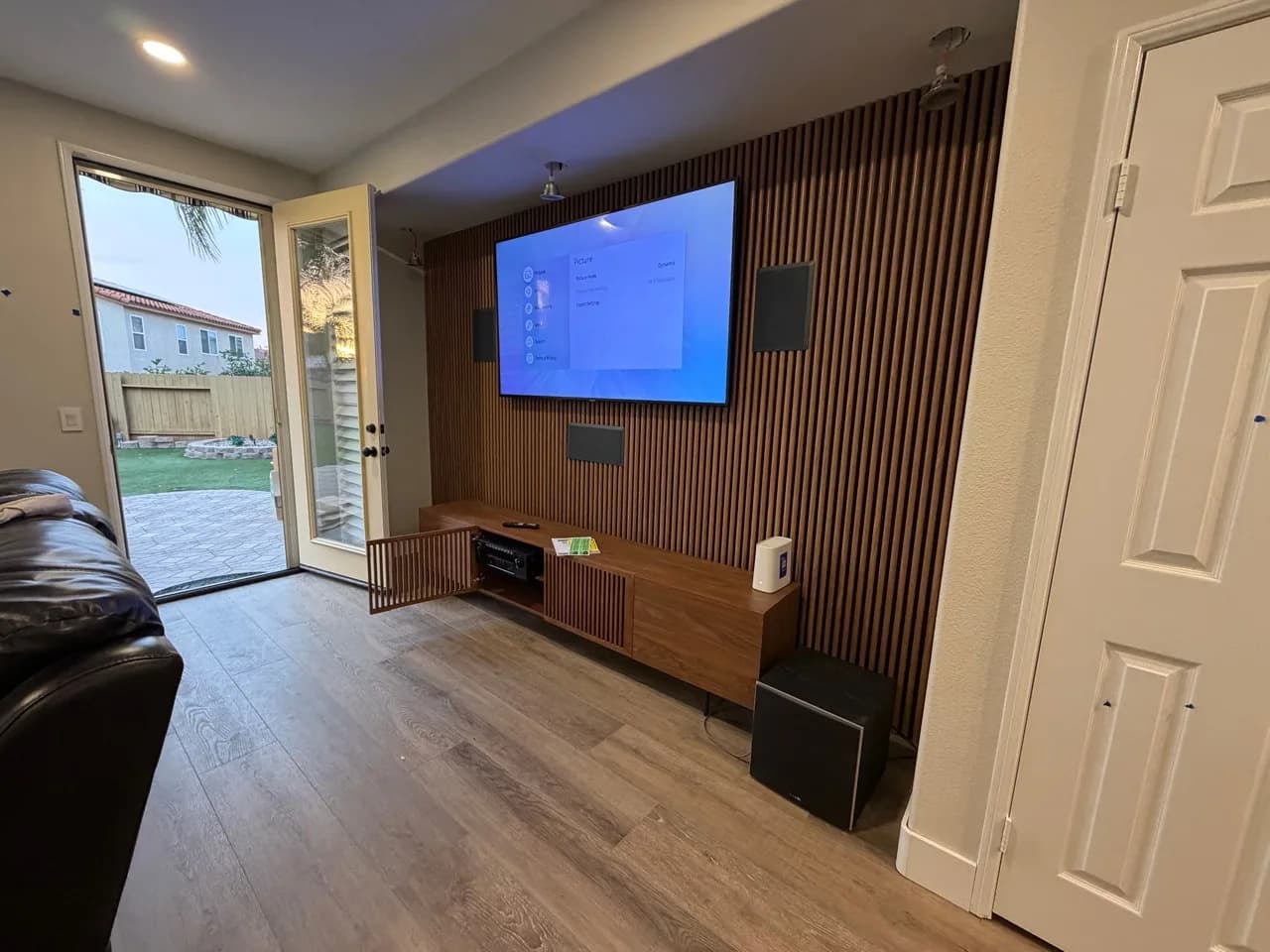
Integrated media wall, finished and connected
A completed display, speaker, equipment, and media-console installation arranged as one clean system.
Real Coastal project photography.
A finished media room
A completed home theater installation with a mounted display and ceiling speakers.
Real Coastal project photography.
Ready for a plan?
Bring the room, wall, and equipment into one conversation.
Tell us what you are installing, where it is going, and what timing you have in mind.